How Long Are License Plates Issued in Michigan?
If you own a vehicle in Michigan — or you’re planning to register one — you may be wondering how long license plates are issued and how long they remain valid. This is a common question for drivers who want to stay compliant with state regulations, as well as for those using a Michigan license plate lookup owner tool to research vehicle information.
The answer depends on understanding two important factors: the physical lifespan of license plates and the legal validity tied to registration. In Michigan, license plates are designed for long-term use, but their legal status depends on keeping your registration current. Let’s explore how it all works.
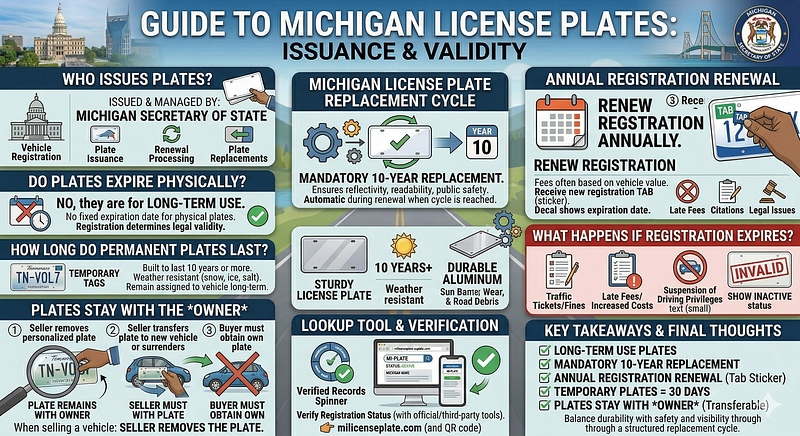
Who Issues License Plates in Michigan?
License plates in Michigan are issued and managed by the Michigan Secretary of State. This office oversees:
- Vehicle registration
- Plate issuance
- Renewal processing
- Plate replacements
When you register a vehicle, the state assigns a license plate that is typically tied to the vehicle.
Do License Plates Expire in Michigan?
Here’s the key takeaway:
License plates in Michigan do not typically expire physically — but the registration associated with them must be renewed regularly.
This means:
- Plates can remain in use for many years
- There is no fixed expiration date for the physical plate
- Registration determines whether the plate is legally valid
If your registration expires, your license plates become invalid — even if they are still attached to your vehicle.
Registration Renewal in Michigan
Michigan requires vehicle owners to renew their registration annually.
What does renewal involve?
Each year, you must:
- Pay registration fees (often based on vehicle value)
- Confirm vehicle and ownership details
- Receive a new registration tab (sticker)
The tab is placed on your license plate and indicates the expiration date.
What happens if you don’t renew?
Failing to renew your registration can result in:
- Late fees and penalties
- Traffic citations
- Possible legal consequences
Additionally, expired registration may appear in public records. If someone performs a Michigan license plate lookup owner search, the plate may show as inactive.
How Long Do Temporary License Plates Last?
When you purchase a vehicle in Michigan, especially from a dealership, you may receive a temporary registration.
Temporary plates or permits in Michigan typically:
- Are valid for 30 days
- Allow legal driving while registration is processed
- Are issued by dealerships
Once your registration is complete, your permanent plate is issued or transferred.
How Long Do Permanent Plates Last?
Michigan license plates are built for durability and long-term use.
Typical lifespan:
- Plates can last 10 years or more
- They remain assigned to the vehicle for extended periods
- They do not require routine replacement under normal conditions
However, Michigan has a structured replacement system to ensure plate visibility and safety.
Michigan License Plate Replacement Cycle
Michigan uses a 10-year replacement cycle for standard plates.
How does it work?
- Plates are typically replaced every 10 years
- Replacement ensures reflectivity and readability
- New plates are issued automatically during renewal when your cycle is reached
This helps maintain clear identification for law enforcement and public safety.
When Are New Plates Issued?
Even though plates are long-lasting, there are several situations where new ones are issued:
1. First-Time Registration
You’ll receive a new plate when registering a vehicle for the first time.
2. Plate Replacement Cycle
Plates are replaced approximately every 10 years.
3. Plate Damage or Loss
If your plate is:
- Lost
- Stolen
- Damaged or unreadable
You must request a replacement.
4. Specialty or Vanity Plates
Custom plates are newly manufactured and issued upon request.
Do Plates Stay With the Vehicle?
In Michigan, license plates generally stay with the owner, not the vehicle.
When a vehicle is sold:
- The seller removes the plate
- The plate can be transferred to another vehicle owned by the seller
- The buyer must obtain their own plate
This owner-based system is important to understand, especially when using a Michigan license plate lookup owner tool, as the plate is tied to an individual rather than a specific vehicle.
Specialty and Vanity Plates in Michigan
Michigan offers a wide range of specialty plates, including:
- University plates
- Military and veteran plates
- Cause-based plates
These plates:
- Require annual renewal
- May include additional fees
- Follow the same 10-year replacement cycle
Vanity plates remain valid as long as:
- Registration is current
- Required fees are paid
If not renewed, the custom plate combination may be released for others to use.
What Happens If Registration Expires?
If your registration is not renewed, your license plates become invalid.
Possible consequences:
- Traffic tickets and fines
- Late fees and increased costs
- Legal issues if driving with expired registration
From a data standpoint, expired plates may still appear in lookup tools. A Michigan license plate lookup owner search may show that the plate is no longer active.
How to Check License Plate Status
If you want to verify a license plate or research a vehicle, you can:
- Use official state resources
- Access third-party lookup tools
For a quick and convenient option, you can check here:
???? https://milicenseplate.com/
These tools can help you:
- Confirm registration status
- Review vehicle details
- Access publicly available ownership-related information (within legal limits)
How Long Do Plates Physically Last?
Michigan license plates are made from durable aluminum and designed to withstand various weather conditions, including snow, ice, and road salt.
Average lifespan:
- 10–15 years or more
Factors affecting durability:
- Exposure to harsh winter conditions
- Road salt causing corrosion
- Physical damage from debris
If a plate becomes difficult to read, it should be replaced — even if it hasn’t reached the 10-year replacement cycle.
Do You Need to Replace Old Plates?
You may need to replace your plates if:
- They are damaged or unreadable
- They are lost or stolen
- They’ve reached the 10-year replacement cycle
- You choose to upgrade to a specialty or vanity plate
Replacement requests are handled through the Michigan Secretary of State.
Key Takeaways
Here’s a quick summary of how long license plates are issued in Michigan:
- Plates are issued for long-term use and do not expire physically
- Registration must be renewed annually
- Temporary plates last about 30 days
- Plates are typically replaced every 10 years
- Plates stay with the owner, not the vehicle
- Replacement is required if plates are damaged, lost, or outdated

Final Thoughts
Michigan’s license plate system is designed to balance durability with safety and visibility. While plates can last for many years, the state ensures they remain readable through a structured replacement cycle.
For drivers, the most important responsibility is staying on top of annual registration renewal. That’s what determines whether your plates are legally valid — not how long you’ve had them.
Whether you’re registering a vehicle, transferring plates, or researching records using a Michigan license plate lookup owner tool, understanding how long license plates are issued in Michigan helps you stay informed and avoid unnecessary issues on the road.